Will Birmingham play in the Dixie Baseball League?
August 16, 1913
It is reported that a new proposed baseball league is trying to form, with plans
to play in six of the Southern Association cities while those teams are playing
on the road. The organization came alive in Memphis on April 12th.
Plans are for clubs to be placed in Atlanta, Birmingham, Chattanooga, Memphis,
Nashville, and New Orleans. Eventually, the league hopes to increase to eight
cities involved, bringing in Little Rock and Shreveport in place of Mobile and
Montgomery. Little Rock and Shreveport have been trying to obtain spots in the
Southern Association for some time.
The startup could begin as early as 1914 and a league charter is planned to be
applied for next week.
However, the Dixie Baseball League is certain to be considered an "outlaw"
league. Currently, professional organized baseball rules prohibit the formation
of a competitor league to operate within a certain radius of cities already
established without their prior approval.
August 18, 1913
President and Treasurer
W. J. Francis
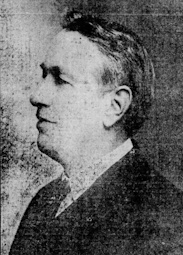
A local man, W. J. Francis, is President and Treasurer of the Birmingham club.
He believes the talk of the proposed league being "outlaws" to wreck organized
baseball is a misjudgment. "This is far from the intention of the league. In the
opinion of the new league directors, the cities named in connection with the new
league have grown to such an extent that they are now able to support two teams.
The people clamor for baseball and when the team is away many are dissatisfied.
I am of the opinion that continual baseball through the summer would pay in
Birmingham as well as the other cities mentioned. We will not fight organized
baseball but if we can gain recognition with the authorities we will join in the
organized class. In fact, we are now making an effort to secure the use of
Rickwood Park for the home games that will be played here. The schedule of our
league will be arranged so that it will not in any way conflict with the playing
of the Southern League club in this city. The two teams will alternate here,
giving fandom of Birmingham continual baseball the year round, and the fans will
have no cause to become disgruntled over the absence of professional ball, for
there will be no absence and a local team will play here every day during the
season," Francis said.
Francis states that local club corporation papers were filed in Probate Court
this morning and the local club is capitalized at $20,000.
If they can't come to an agreement with Rickwood, Francis says they would be
forced to build their own baseball park.
Regarding the league, charter papers were filed in Nashville this morning. The
plan is to have local ownership of clubs, but not by individuals. They hope to
be associated with the Federal League. Their goal is to be considered a Class A
baseball league, on par with the Southern Association in every way.
It has been mentioned that the new league would like to have a best-of-seven
championship series at the close of the season against the winning Southern
Association club.
August 19, 1913
Francis believes the Dixie League will be able to exist with the Southern
Association. "The proposition will be presented to President W. M. Kavanaugh of the
Southern league at an early date. Should he approve of the plan - and we have
assurances that he will - the Dixie League will conform to the laws and
regulations of organized baseball. We expect to receive a reply within the next
ten days and should we fail, we will begin to work on the "outlaw" scheme. We
have a piece of property in view of the park in case we are unable to secure
Rickwood, and may erect a park of our own. We have not given the players much
consideration for we feel that they will be the easiest proposition. But until
we are given a reply by President Kavanaugh, the matter of players, salary
limit, managers, and parks will not be considered," Francis said.
August 20, 1913 Birmingham Barons owner
Rick Woodward says he is willing to share Rickwood park should the proposed
league gain the recognition of organized baseball.
Woodward doesn't think that will happen and wonders why anyone thinks another
league is needed. "Just why the Dixie is being organized is puzzling. If the
Southern league franchise looks so healthy to the promoters, I do not imagine
they would have trouble in securing it. Several of the Southern league
franchises could be purchased without much difficulty. Despite the statements
that both leagues could easily make money, there evidently is a bit of
misinformation. Although Birmingham is conceded to be one of the best ball towns
in the league, we have never made money. Of course, a bit has been cleared at
times, but not enough to cnsider the investment lucrative," Woodward said.
August 27, 1913
Dixie League Secretary H. N. Pharr met with Southern Association President W. M.
Kavanaugh in Little Rock this morning.
In their proposal, the league is offering a guarantee to the Southern
Association. If attendance shrinks in 1914 they will reimburse the Southern
Association for the difference between the totals of the 1913 season.
While the Dixie League wants to be on good terms with the Southern Association,
it also stated that if they didn't work with the new league it could find the
opposition too costly.
After the meeting, Kavanaugh said his league's decision to welcome, or not, the
proposed league will be left up to the eight Southern league clubs.
Also, investors in Jackson and Knoxville are hoping to secure Dixie League clubs
for their cities.
August 27, 1913
Shreveport will not be a part of the proposed league. Many believe Shreveport
wants to join the Texas League instead. Jackson is the leading replacement
candidate.
August 29, 1913
The Southern Association learns that it could be demoted to Class B status if
the Dixie League is granted acceptance by organized baseball.
Leagues are rantked by the National Association of Minor League Clubs ino Class
AA, Class A, Class B, Class C, and Class D, depending on the total population of
the towns comprising the circuits. The Southern Association is firmly in the
Class A ranking, but if the Dixie League is recognized the population of
matching cities would be halved, meaning the Southern Association's total
population would decrease considerably, thus landing them into Class B.
August 30, 1913
Barons President R. H. Baugh announces that the Birmingham club has refused to
accept the Dixie League's proposal and will ask the other Southern Association
owners to do the same.
Baugh said the Southern Association cities don't have the population to support
two Class A clubs and would not allow the Dixie League access to Rickwood Field.
October 22, 1913
The organizers of the Dixie Baseball League have abandoned their plans to start
a new league.
Pharr sent a letter informing investors that they could not secure organized
baseball approval and operating as an "outlaw" league would not be a profitable
venture.
Epilogue
The Dixie Baseball League did have some interesting facets to their proposals.
However, not gaining recognition by organized baseball was their downfall.
The Southern Association continued play until ceasing operations after the 1961
season.
The Birmingham Barons remained a part of the league until the end.